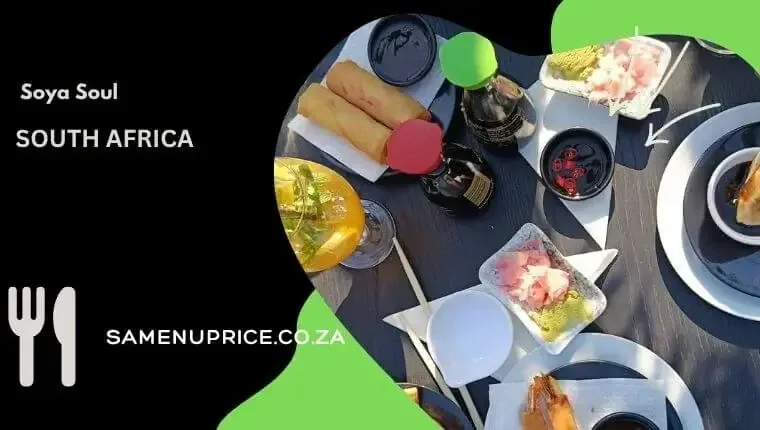
Soya Soul is an Asian restaurant at Riverside Shopping Centre in Bryanston, Johannesburg. Its menu moves from classic and signature sushi to dim sum, bao, poke bowls, Thai curry, ramen, fried rice and noodles. That range makes it useful for a mixed group, but it also means that the final bill can change quickly depending on whether everyone orders individual dishes, shares small plates or chooses the sushi buffet.
Prices in this guide were checked in September 2026. On the current Riverside delivery listing, small plates start around R79, bao costs about R109 to R124, ramen is around R159 to R165 and poke bowls cost about R174 to R195. A recently published Johannesburg dining guide reported the daily buffet at R268 per adult and R185 for a child under ten. Treat that buffet figure as a time-sensitive offer and confirm its rules before visiting.
Soya Soul prices at a glance
| Menu section | Current example range | What affects the bill |
|---|---|---|
| Small plates | About R79 to R132 | Ingredients and portion size |
| Spring rolls and soup | About R46 to R85 | Vegetable, chicken or prawn filling |
| Bao | About R109 to R124 | Tofu, chicken or beef |
| Dim sum | About R75 to R178 | Four-piece portion or mixed platter |
| Poke bowls | About R174 to R195 | Chicken, salmon or prawn |
| Thai curries | About R148 to R185 | Vegetable, chicken or prawn |
| Ramen | About R159 to R165 | Chicken, beef or pork |
| Pad Thai | About R165 to R190 | Tofu, chicken or prawn |
| Sushi platters | About R187 to R1,255 | Piece count and seafood mix |
| Reported buffet | R268 adult; R185 child | Age, session and current promotion |
These are planning figures rather than a single fixed tariff. The checked à la carte amounts came from a delivery channel, where menu prices and fees may differ from dining in. Items marked “from” can increase when a customer changes the protein or chooses a larger portion. Check like for like before deciding that one option is cheaper.
Small plates, spring rolls and soup
The small plates work well as starters or as part of a shared meal. Current examples include edamame beans at R79, crispy chicken bites at R88, Asian fries and crispy tofu at R91, Korean fried chicken wings at R93 and three prawn tempura pieces at R112. Salmon or prawn tempura nori tacos are around R132 for two. These dishes vary greatly in richness, so a table does not need one starter per person.
Asian fries are a full, loaded dish rather than a plain side. They combine fries with beef strips, mozzarella, sauces, spring onion and sesame. One order can fill the same role as two lighter starters. Edamame or miso soup makes more sense when the mains will be rich. Crispy chicken bites are easy to share, although their price should be compared with the number of diners rather than with a full main course.
Spring rolls are among the cheaper entry points. Two vegetable spring rolls are about R46, cheese and crab rolls about R56, and prawn and mozzarella rolls about R85. Miso soup is around R51 and chicken sweet corn soup around R56. A soup plus a small sushi portion can create a moderate meal without moving into the R160 to R200 main-course range.
Bao and dim sum prices
Bao arrives as two steamed buns with vegetables, pickles and sauces. Crunchy tofu bao is about R109, crispy chicken bao R118, and beef teriyaki or gochujang chicken bao about R124. Two buns may be enough for a light lunch, but a hungry diner will usually want another plate. For a group, bao is easier to divide when everyone orders the same quantity because a two-piece serving does not split neatly among three people.
Four spinach and cream cheese gao cost around R75. Pork steamed dumplings are about R88, chicken siu mai R90, pork and prawn dumplings R105 and prawn gao R108. The assorted eight-piece dim sum platter is about R178. The platter offers variety at roughly R22 per piece, while the individual portions allow a table to avoid ingredients that one diner does not eat.
Dim sum names do not always reveal every ingredient. A pork dumpling may include mushroom, while a mixed platter can contain pork, chicken, prawn, beef or dairy across different pieces. People with allergies, religious dietary rules or strict vegetarian requirements should ask about fillings, wrappers, sauces and shared cooking equipment. Removing a garnish does not remove an ingredient already inside a dumpling.
Poke bowls, curries, ramen and noodles
A poke bowl is a practical one-bowl meal. The chicken option is about R174, while salmon and prawn bowls are about R195. They include rice, vegetables, pickles and sauce, so the higher price covers a complete composition rather than only the protein. Ask whether sauces can be served separately if you want better control over sweetness, chilli or richness.
Thai curry prices currently run from roughly R148 for a vegetable red or green curry to R167 for chicken and R185 for prawn. Jasmine rice is included in the listed description. That matters when comparing it with a dish whose rice must be purchased separately. Green curry may contain fish sauce, so the word “vegetable” should not automatically be read as vegetarian or vegan.
Chicken tonkotsu ramen and cha siu tonkotsu ramen are around R159, while spicy beef tonkotsu is around R165. Tonkotsu refers to a pork-bone broth, even when chicken or beef appears in the dish name. Diners avoiding pork should ask before ordering rather than judging the broth by the topping. Ramen travels less reliably than sushi or fried rice because noodles continue absorbing liquid in transit.
Pad Thai costs around R165 with tofu, R178 with chicken and R190 with prawn. It includes rice noodles, egg, bean sprouts, tofu, peanuts, chilli and vegetables. The peanut and egg content deserves attention for allergies. A wok noodle or fried-rice base may show a low “from” amount online, but the selected protein raises the actual total. Complete the options on the ordering screen before comparing prices.
Classic sushi prices explained
Classic sushi is priced by style, ingredient and piece count. Four salmon, tuna or prawn California rolls are about R58, with eight pieces around R116. Four vegetable California rolls are about R48 and eight around R96. A six-piece salmon maki is around R58, tuna or prawn maki R60, and avocado or cucumber maki R49.
Fashion sandwiches cost a little more. Four salmon pieces are about R66, while tuna or prawn versions are around R69. Eight pieces range from about R130 to R138. Hand rolls are sold individually: vegetable is about R52, while salmon, tuna and prawn examples are around R60. Count the pieces carefully because a lower menu number may simply describe half the quantity.
Rainbow rolls are around R64 for four seafood pieces and R128 for eight. Vegetable rainbow rolls are about R50 and R100. Two salmon, tuna or prawn nigiri pieces are around R49. Three salmon or tuna roses cost about R80. Tofu boats range from about R49 for avocado and cucumber to R62 for seafood versions.
Sashimi carries a higher price per piece because the serving is primarily fish. Three salmon or tuna pieces are around R105 and eight pieces around R280. A diner seeking volume will get more pieces from maki or California rolls, while a diner who wants a direct taste of the fish may prefer sashimi. The two choices serve different purposes, so piece count alone is an incomplete value comparison.
Signature sushi
Signature rolls add tempura, sauces, cheese, spice, toppings or several kinds of seafood. Four-piece examples include Hot Rock and Roll at about R78, Dragon Roll at R83 and Deluxe Roll at R89. Larger examples include an eight-piece tempura prawn roll at R136, Hot Rock and Roll at R147, Dragon Roll or Green Roll at R153, Tokyo Roll at R165 and Deluxe Roll at R173.
The richer rolls can eat more like a main course than a side. A deep-fried roll with mayonnaise, cream cheese and sweet sauce is more filling than the same number of plain maki pieces. Ordering two elaborate rolls per person can create too much food and a surprisingly high bill. Start with one mixed selection for the table, then add more if the group is still hungry.
Signature names are not reliable allergy guides. Tempura may contain gluten, creamy sauces can contain egg, and a roll may combine shellfish with other fish. Cross-contact is also possible in a busy sushi kitchen. Anyone with a serious allergy needs direct guidance from the restaurant; a menu summary cannot establish that a dish or preparation area is allergen free.
Sushi platter prices and who they suit
The 17-piece Green Platter is about R187 and is the lowest-priced checked platter. The 20-piece Soya Platter is around R239. A 15-piece Summer Platter is about R210, while the 20-piece Salmon Platter and 20-piece Signature Platter are around R395 and R390. The difference reflects ingredient mix, not merely the number of pieces.
The 76-piece Party Platter is about R1,255. Divided among six people, that is roughly thirteen pieces and R209 per person before drinks, delivery and extras. Divided among eight, it is about nine or ten pieces and R157 per person. Those calculations help, but appetite and the types of pieces matter. Maki is lighter than a large dressed signature roll.
A platter is convenient when the table accepts its set composition. Ordering individual rolls is better when diners have different allergies or strong dislikes. Check how many pieces contain raw fish, shellfish, mayonnaise or cream cheese. A “vegetable” platter may still be prepared beside seafood, so strict dietary needs require a separate conversation with the restaurant.
How the sushi buffet works
A Johannesburg dining report published in August 2026 listed Soya Soul's daily buffet at R268 per adult and R185 per child under ten. It described lunch from 11:00 to 16:30 and dinner from 17:00 to 21:00. Because buffet prices, ages and sessions are promotional details, confirm all of them on the day you plan to visit.
The buffet is most valuable for a diner who wants several rounds and enjoys the eligible selection. It is not automatically cheaper. A light eater can spend less with a R159 ramen, a R174 chicken poke bowl, or one classic roll plus soup. An adult reaches R268 quickly with two larger signature rolls, but price is only one consideration: the buffet may limit sharing, takeaway, leftovers or certain premium dishes.
Ask four questions before sitting down: the current adult and child prices, the exact service session, which menu items are included, and whether uneaten food attracts a charge. Also ask whether every person at the table must take the buffet. These rules protect the restaurant from sharing and waste, and they can materially change whether the offer works for a family.
Order in measured rounds. Sushi rice becomes filling after the first plate, and fried dishes add weight quickly. A small first round lets everyone identify favourites without creating waste. Do not treat unlimited ordering as a race. The better approach is to eat slowly, reorder what the table enjoyed, and stop when satisfied.
Drinks and extras
Common canned soft drinks are around R36 on the checked delivery menu. Mixers and 250 ml water are about R30, Appletizer and Grapetizer about R43, iced tea R48, juice R50 and Red Bull R57. A 750 ml still or sparkling water is about R59. Four R36 drinks add R144, which can exceed the price of another shared starter.
Extra soy sauce costs about R10, extra wasabi or ginger R15 and extra mayonnaise R20. Small extras matter on a large delivery order, particularly when the restaurant already includes standard condiments. Check the basket before paying so repeated automatic additions do not become unnecessary paid portions.
Planning a meal for one
For a light meal, combine miso soup at about R51 with four vegetable California rolls at R48, for roughly R99 before fees. A salmon version brings the same structure to about R109. A two-piece bao portion at R109 to R124 can also work alone when appetite is modest.
For a fuller meal, choose one bowl or noodle dish. A vegetable curry at R148, ramen at R159 to R165, chicken poke bowl at R174 or chicken Pad Thai at R178 gives a clearer budget than collecting several small plates. Add a R36 soft drink and the food-and-drink subtotal is roughly R184 to R214.
A sushi lover could order eight salmon California pieces at R116 and three salmon roses at R80, creating an eleven-piece meal around R196. Substituting sashimi raises the price while reducing rice. The better choice depends on whether you value fullness, fish quality, variety or a lighter serving.
Planning for two or a group
Two diners can share crispy chicken bites at R88, an assorted dim sum platter at R178 and a Soya Platter at R239. That is about R505, or R252.50 each, before drinks and fees. It provides fried, steamed and sushi dishes, although it may be too much for light appetites. Removing one starter brings the total down.
For four people, begin with two shared starters and two platters rather than allowing every diner to select several items immediately. A Green Platter and Soya Platter together provide 37 pieces for about R426. Add chicken bites and assorted dim sum and the food subtotal becomes about R692, or R173 each. The table can then decide whether it truly needs another round.
Groups should decide how the bill will be divided before ordering. An equal split is simple only when everyone shares food and drinks at a similar level. Separate bills are fairer when some diners choose cocktails, sashimi or premium platters. Ask whether the restaurant can split payment and whether a service charge applies to larger tables.
Delivery versus dining in
Delivery is useful for classic rolls, platters, bao and fried rice, but the channel can add higher item prices, service fees and delivery charges. Promotions may reduce part of that difference. Build the basket through to the final payment screen, because the menu subtotal alone does not show the true delivered cost.
Temperature and texture also matter. Tempura and fries soften in a closed container. Ramen noodles absorb broth, and dressed sushi can lose its crisp finish. If the journey is long, choose items that travel well and request separate sauce where available. Eat raw fish promptly and keep it chilled rather than leaving the order at room temperature.
Dining in gives access to the room, table service, freshly assembled dishes and the buffet. Delivery gives privacy and easier group planning. Neither channel is always better value. Compare the full cost with the experience you want, then use the price source from the same channel.
Vegetarian and dietary choices
Vegetarian-looking choices include edamame, tofu, vegetable spring rolls, spinach and cream cheese gao, vegetable sushi, the Green Platter, tofu Pad Thai and vegetable curry. Some contain dairy or egg, and sauces or broths may contain fish products. A plant-based diner should ask about each complete recipe instead of relying on the main ingredient.
Gluten can appear in soy sauce, tempura batter, noodles, dumpling wrappers and marinades. Sesame, shellfish, fish, egg, dairy and peanuts appear across the menu. Shared fryers, knives and preparation surfaces can create cross-contact. Tell staff about a serious allergy before ordering and follow their current guidance.
Raw seafood is another personal consideration. Pregnant customers, young children, older diners and people with weakened immune systems may prefer cooked choices based on professional medical advice. Cooked chicken, curry or vegetable dishes broaden the menu, but the same kitchen still handles raw seafood.
How to get better value
First, compare portion sizes. Four pieces at R58 are not cheaper than eight at R100 simply because the displayed number is lower. Second, compare the whole dish. A curry includes rice, while a small plate may need another order to become a meal. Third, avoid ordering several rice-heavy rolls before knowing the group's appetite.
Use the buffet when you genuinely want variety and enough food to justify the fixed price. Use à la carte when you want one bowl, have specific dietary needs, or eat lightly. For delivery, compare the final basket with collection or dine-in costs. A discount can be cancelled by fees or channel mark-ups.
Finally, set a drinks budget. Water, soft drinks and cocktails can move a moderate meal into a higher spending bracket. Sharing a large water and choosing one paid drink each is an easy way to control the total without reducing the food selection.
Location and practical checks
Soya Soul is at Riverside Shopping Centre, 319 Bryanston Drive and Cambridge Road, Bryanston, Johannesburg. Opening hours can change around holidays, private events and centre schedules. Confirm the hours and kitchen closing time before a long trip, especially when your visit depends on a particular buffet session.
Reservations are sensible for a larger group or a busy evening. Mention children, wheelchair access needs, allergies and seating preferences when booking. If you plan to use a promotion, state its name and ask whether it applies at the chosen time. Screenshots of old adverts are not proof that an offer is still active.
Final ordering advice
Soya Soul works best when diners use the breadth of the menu deliberately. Choose a bowl for a straightforward individual meal, combine dim sum and sushi for variety, or use a platter for a group that shares similar tastes. The buffet can offer strong value for a hungry sushi fan, while à la carte remains more economical for a light eater.
For a realistic budget, allow roughly R100 to R130 for a light combination, R150 to R200 for many individual mains, and R200 to R300 per person for a broader shared meal with a drink. Premium sushi, several drinks, delivery fees or a large number of starters will raise that figure. Confirm the current restaurant or ordering-channel price before committing.
The simplest successful order is balanced: one or two shared starters, enough sushi or mains for the actual appetite, and a clear plan for drinks. Check piece counts, fillings and buffet conditions, then add more only if needed. That approach protects both the budget and the quality of the meal.