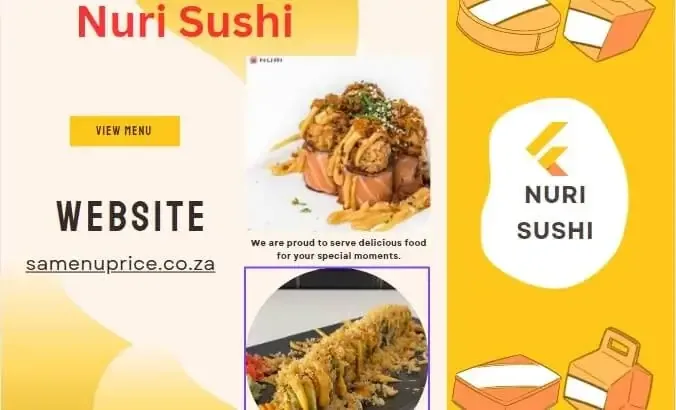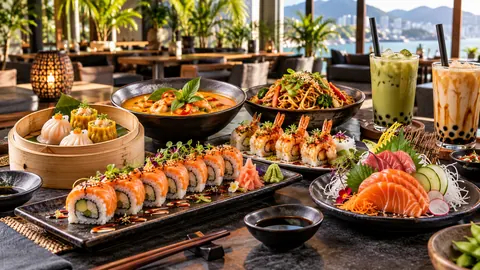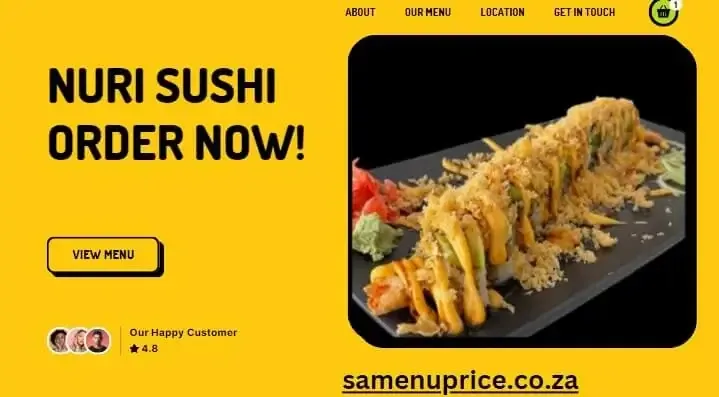
Nuri Sushi is a Cape Town sushi business known for classic pieces, dressed gourmet rolls, crunchy combinations and large sharing platters. Several locations also trade with KO Burger, so a mixed group can choose sushi, poke bowls, snacks or burgers from one order. The menu is broad, but piece counts and branch prices need careful comparison.
Prices in this guide were checked in September 2026 using current CBD and Promenade delivery listings. At the CBD branch, many classic four-piece or six-piece choices are around R52, roses and sashimi are around R72, and popular platters range from R195 to R315. The same platter can cost less at another branch or on another delivery service.
Nuri Sushi prices at a glance
| Menu section | Selected current price | Important detail |
|---|---|---|
| Classic sushi | About R45 to R72 | One to six pieces depending on style |
| Rice-free sushi | About R79 to R105 | Four or five pieces |
| Crunchies | About R39 to R65 | Usually five pieces or one crunch burger |
| Small combos | About R90 to R180 | Roughly eight to fifteen pieces |
| Value platters | About R195 to R260 | Branch and fish mix affect price |
| Premium platters | About R285 to R315 | More sashimi and salmon |
| Large party platters | About R1,300 | Up to 150 assorted pieces |
| Snacks | About R33 to R65 | Fries, spring rolls, tempura or dim sum |
| Selected poke bowl | About R120 | Calamari example at CBD |
| Selected KO burger | About R105 | Avo and caramelised onion example |
Delivery prices are not a national tariff. They can include a channel mark-up, and the final checkout can add fees. A menu card that says California roll or maki may ask for a filling after selection. Complete those choices before treating the displayed starting price as the final amount.
Classic sushi prices
At the checked CBD listing, four California roll pieces cost about R52. Four fashion sandwiches and six maki pieces also start around R52. These formats contain different amounts of rice and filling, so the identical price does not mean an identical serving. Maki is compact, while a fashion sandwich is usually wider and more layered.
Two bean-curd pockets or two nigiri pieces are around R45. One hand roll is around R59. Four salmon roses and four sashimi pieces are about R72. A diner comparing only piece count may miss the ingredient difference: sashimi is sliced fish without rice, while a pocket or roll uses rice to create a fuller bite.
Classic listings can be generic. Selecting salmon, tuna, prawn, crabstick or vegetable filling may change the amount or availability. The branch may also remove a choice when stock is limited. Check the option screen and basket rather than relying on the category headline.
What the sushi styles mean
Maki places a filling and rice inside a sheet of nori. California-style rolls usually turn the rice to the outside. Fashion sandwiches layer rice, nori and filling into compact blocks. Nigiri places a slice of fish or seafood over shaped rice, and sashimi removes rice entirely.
Roses wrap salmon around rice and often add mayonnaise or another topping. A hand roll is a cone designed as one larger piece. Bean-curd pockets use seasoned tofu skin around rice. Understanding the form helps predict fullness: six maki pieces and four sashimi slices can have similar menu prices but create very different meals.
Rice-free rolls use cucumber, nori or fish instead of the usual rice layer. They suit diners who want less rice, although they are not automatically low in sauce, fat, sodium or allergens. “Rice free” also says nothing about gluten in soy sauce or cross-contact in preparation.
Rice-free menu
Four pieces of new-style sashimi are about R79 on the CBD delivery menu. Five cucumber-wrapped salmon-and-tuna pieces cost around R105, as do five seaweed-wrapped sashimi rolls. These portions are lighter in starch and higher in fish per bite than many standard rolls.
The 20-piece rice-free platter is around R285 at the CBD listing and about R265 on one Promenade channel. It is described as a chef's combination of salmon and tuna sashimi rolls. Confirm the exact mix when allergies or fish preferences matter because a chef's selection can change.
Rice-free sushi can cost more per piece because fish replaces inexpensive rice. It is best chosen for preference rather than as a route to the largest portion. A hungry diner may want edamame, soup or another side to make the meal more substantial.
Crunchies and fried snacks
Selected branches list a five-piece vegetable crunch around R39 and crabstick crunch around R45. Salmon, smoked salmon, tuna-and-cheese and prawn crunch options are about R59. A spicy prawn crunch burger is around R59, while the salmon version is about R65.
These are richer than plain sushi because they use fried components and creamy or sweet sauces. Five crunchy pieces can feel more filling than five pieces of sashimi. They also travel differently: steam softens the coating, so collection or a short delivery journey gives a better texture.
Small “gap filler” items at the N1 City listing include Asian fries and vegetable spring rolls around R33, crab-and-cheese spring rolls R39, edamame or tempura calamari R45, three tempura prawns R52, and prawn dim sum, rock-shrimp tempura or prawn pops around R65.
A gap filler is useful when the main platter is slightly too small for the group. Adding several without a plan can erase the value of choosing a platter. Start with the estimated sushi pieces per person, then add one shared snack only where appetite or variety requires it.
Nuri combos
Smaller named combinations allow one person to try several styles. The Grenades ten-piece selection and Yin Yang mix are around R90. The Crunch thirteen-piece combo, California twelve-piece set, R&R eight-piece set and Old School ten-piece set are around R120.
Crunch Mix provides fifteen pieces for about R155. Ray's Deluxe gives ten dressed pieces for around R169, and Blondmbition offers eleven pieces at the same price. The Gibbs twelve-piece selection is about R180. The higher price per piece usually reflects salmon, toppings, sauces or more elaborate preparation.
For pure volume, compare total pieces and fillings. For variety, compare how many distinct styles the box contains. Ten premium pieces may be more enjoyable than fifteen similar fried pieces, but a hungry diner may prefer the larger count. There is no universal best-value combo.
Value and premium platters
The Crunch Munch platter has 24 pieces and costs about R195 at CBD. It combines crunchy prawn, smoked salmon, crab, tuna and IKA-style pieces. The 18-piece tuna value platter is also around R195, trading quantity for more fish-focused sushi.
The 18-piece salmon value platter is around R235 at CBD. It includes California rolls, sashimi, nigiri and tuna roses in the current description. The 21-piece Botha platter is also around R235, while the 23-piece Nuri platter is about R260.
Premium choices include the 20-piece rice-free platter around R285 and the 23-piece salmon deluxe platter around R315. The deluxe mix includes sashimi, roses, California rolls, rainbow rolls and bamboo rolls. It costs more because salmon and sashimi replace some lower-cost rice-heavy pieces.
Promenade prices illustrate branch variation. A current Mr D listing showed the Nuri platter near R240, Botha platter R215, salmon value platter R220, rice-free platter R265 and salmon deluxe R290. The same named product can therefore differ by R20 to R25 before delivery fees.
Large platters and group maths
A 36-piece G&M platter is around R325 on the Promenade listing, and a 60-piece chef's platter about R540. Both work out near R9 per piece before fees. That average is useful, although a chef's assortment may contain a mix of lower-cost and premium pieces.
The corporate platter contains 150 assorted pieces. It is around R1,300 at CBD and R1,200 on the checked Promenade channel. At R1,300, the average is about R8.67 per piece. For ten people, it supplies fifteen pieces each at a food cost of R130 per person.
Fifteen pieces per person can be generous when many are fried, dressed or rice-heavy. For a meeting with light eaters, the platter may serve more than ten. For a hungry dinner group, it may serve fewer. Add edamame or spring rolls for variety rather than automatically adding another large sushi box.
Ask how much notice the branch needs for a 150-piece order. Large platters take time, and seafood stock must be available. Confirm the pickup time, platter composition, sauces, chopsticks and refrigeration plan. Raw fish should not sit unrefrigerated through a long meeting.
Poke bowls and KO Burger
The CBD listing showed a grilled calamari poke bowl around R120, with salad, avocado, edamame, sushi rice, mayonnaise and spicy sesame sauce. A poke bowl is a complete individual meal and can be easier to budget than several small sushi choices.
KO Burger expands the choice for diners who do not want sushi. A selected avocado-and-caramelised-onion burger was about R105. Burger choices and prices vary by location and channel, so check the chosen branch. Also confirm whether chips are included or separate.
A mixed order helps groups with different preferences, but it increases allergy complexity. Burger buns contain gluten, sauces can contain egg, and the same restaurant handles seafood, sesame and soy. A person with a serious allergy needs branch-specific advice rather than an assumption that a burger station is separate.
Sample order for one
A light classic order could be four California pieces at R52 and two nigiri at R45, for about R97 before fees. A hand roll plus edamame would be roughly R104 at branches showing R59 and R45. These combinations give variety without committing to a large platter.
For a fuller meal, the twelve-piece California combo or thirteen-piece Crunch costs around R120. A grilled calamari poke bowl is also around R120. The combo suits someone focused on sushi, while the bowl adds vegetables and a single balanced format.
Ray's Deluxe at R169 or an eleven-piece Blondmbition at the same price targets a diner who likes dressed premium combinations. Four pieces of sashimi plus another classic roll can reach a similar total with less sauce and fried texture. Choose according to style, not only the rand amount.
Sample order for two
The Crunch Munch platter at R195 offers 24 pieces, or twelve per person, before any snack. Adding edamame at R45 gives a planning food subtotal around R240, or R120 each. This is one of the simpler lower-cost sharing plans.
The Nuri platter at R260 provides 23 varied pieces. Add prawn pops at R65 and the subtotal becomes about R325, or R162.50 each. This choice uses more raw fish and premium pieces than a crunch-focused platter. It is a better comparison for diners prioritising variety over maximum piece count.
Two people with different tastes may do better with separate combos. One can choose a R120 classic or crunch set while the other chooses rice-free sushi around R105 plus a side. Separate choices reduce arguments about the last premium piece and make dietary preferences easier to manage.
Sample order for four
A 36-piece platter at R325 gives nine pieces per person. Add a 15-piece Crunch Mix at R155 and the group has 51 pieces for about R480, or nearly thirteen pieces and R120 per person. That is a practical starting point before drinks and delivery fees.
Another route is the Nuri platter at R260, Crunch Munch at R195 and two shared sides around R45 to R65. Food would land near R545 to R585. This costs more but provides raw, classic and fried choices. Check overlap so the two platters do not repeat more styles than the group wants.
For a party, count adults and children separately and ask about appetites. Five to eight pieces may satisfy a young child, while a hungry adult may want twelve to eighteen. Fried pieces and rice-heavy rolls fill diners faster than sashimi. Order a little conservatively and keep a simple add-on option available.
Delivery versus collection
Delivery menus provide useful current prices but may be higher than direct collection. The platform can add service, delivery and small-order fees after the food subtotal. Promotions can reduce the basket but may require a minimum spend or apply to selected items only.
Build the order to the final screen before comparing branches. A platter that is R20 cheaper can become more expensive after fees. Distance affects both cost and food quality. Sushi should arrive cold, while crunchy pieces should spend as little time as possible steaming in closed packaging.
Collection gives more control over timing. Inspect the order before leaving, especially for a large platter. Count boxes rather than individual pieces at the counter, check sauces and extras, and transport raw seafood in a cool vehicle. Refrigerate it promptly if it will not be eaten at once.
Raw fish and food safety
Sashimi, salmon roses, nigiri and many premium rolls may contain raw fish. People who are pregnant, very young, older or immunocompromised may need to avoid raw seafood based on professional medical advice. Cooked prawn, tempura, vegetable rolls or burgers offer alternatives, though cross-contact remains possible.
Fresh sushi should smell clean, remain properly chilled and be eaten promptly. Do not save a delivery at room temperature for later. If packaging arrives warm, damaged or unusually delayed, contact the delivery service or branch rather than taking an unnecessary risk.
Allergens and dietary requirements
Fish, shellfish, soy, sesame, egg, gluten, dairy and nuts appear across Nuri's menu. A gourmet roll can combine several of them in one sauce or topping. Tempura batter and ordinary soy sauce commonly contain gluten. Mayonnaise usually contains egg, and cream cheese contains dairy.
Vegetable sushi may avoid fish as an ingredient but can be cut and assembled near seafood. Bean-curd pockets are not automatically gluten free because their seasoning can contain soy or wheat. Tell the branch about a serious allergy and ask what its current kitchen can safely prepare.
Delivery listings describe some Nuri locations as Halaal. Diners who require certification or a specific standard should confirm the current branch status directly. Branch operations and suppliers can differ, so one location's listing should not be applied to every store.
How to get better value
Compare the price per piece only among similar products. A 24-piece crunch platter and an 18-piece salmon platter have different ingredient costs. Use per-piece maths to spot obvious differences, then check how much raw fish, salmon, prawn and fried filling each contains.
Mix one high-value platter with one favourite premium roll instead of making the whole order premium. This gives the table volume and a special item. Avoid buying several small four-piece portions when a suitable platter contains the same styles at a lower average price.
Choose the closest reliable branch and compare collection with delivery. Branch price differences can matter on large orders, but travelling far for a R20 saving does not make sense. Account for fees, fuel, time and the risk of warming raw fish.
Order sauces and extras only when needed. Standard soy, ginger and wasabi may already be included. Large groups should specify chopstick and condiment quantities so the branch can pack enough without waste.
Final ordering advice
Comparing branches without losing time
Start with the branch that can actually serve your address or collection route. Open the same named platter at two nearby locations and compare its description, not only its title. One branch may substitute pieces, show a different piece count or remove a fish that is out of stock. A fair comparison uses the same product, same channel and same fulfilment method.
Then check the final cost. Suppose one platter is R240 at Promenade and R260 at CBD. The R20 food difference disappears if the cheaper branch has a higher delivery fee or takes much longer to reach you. Collection also has a transport cost. Choose the option with the best total and a journey short enough to protect food quality.
Availability can settle the choice. A lower price is irrelevant if a required rice-free, vegetable or cooked option is unavailable. For a group order, make a short list of essential items before comparing branches. This prevents the table from saving a small amount while losing the one dish a diner can safely eat.
Building a balanced platter order
A balanced order has a base, premium pieces and a small amount of crunch. The base can be California rolls, maki or fashion sandwiches. Add sashimi, roses or nigiri for diners who enjoy raw fish. Finish with one crunchy roll or tempura side. This gives contrast without allowing fried pieces and heavy sauces to dominate every box.
For ten adults, the 150-piece corporate platter supplies fifteen pieces each. If the selection is rice heavy, that may already be enough. Instead of ordering another full platter, add two or three shareable sides and reassess. For a longer event, serve sushi in smaller batches and keep unopened boxes chilled rather than placing everything out at once.
Label special meals clearly. Keep a vegetable selection separate from seafood, and do not place gluten-sensitive or allergy-aware items on a shared platter unless the branch confirms suitable preparation. Individual labelled boxes cost more packaging but reduce confusion at a busy office or family event.
What to check when the order arrives
Confirm the number of containers, platter names and paid extras while the driver is present or immediately after delivery. Photograph a damaged or incomplete order before rearranging it. Delivery platforms usually need the order number and a clear explanation, and a quick report gives the branch a better chance to investigate.
Raw items should feel cool, fried items should not show excessive delay, and lids should be secure. Match special labels to the correct diner. If a serious allergen request appears to be wrong, do not solve it by removing a visible topping; contact the branch because sauces and preparation contact may also be involved.
Nuri Sushi offers strong choice at several spending levels. Around R100 can buy a light classic combination. Roughly R120 to R180 covers many individual combos or a bowl, while R195 to R315 reaches the main platter range. Large group boxes reduce the average cost per piece.
The best order starts with the branch, channel and number of diners. Next choose a balance of classic, premium, fried and rice-free pieces. Check fillings, raw fish, allergies and piece counts before payment. Leave the final basket open long enough to see every fee.
Use the figures here as a dated budget guide. The selected branch's current menu and checkout total control the transaction. With that check done, Nuri can serve a quick individual lunch, a mixed family order or a large office platter without guesswork.
More menu images