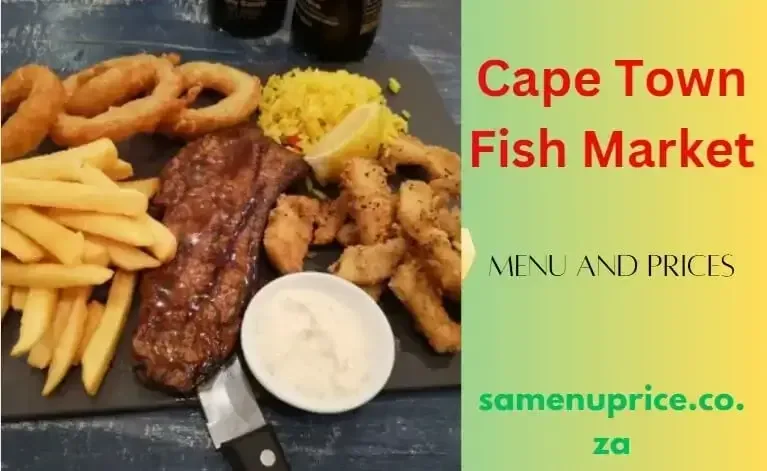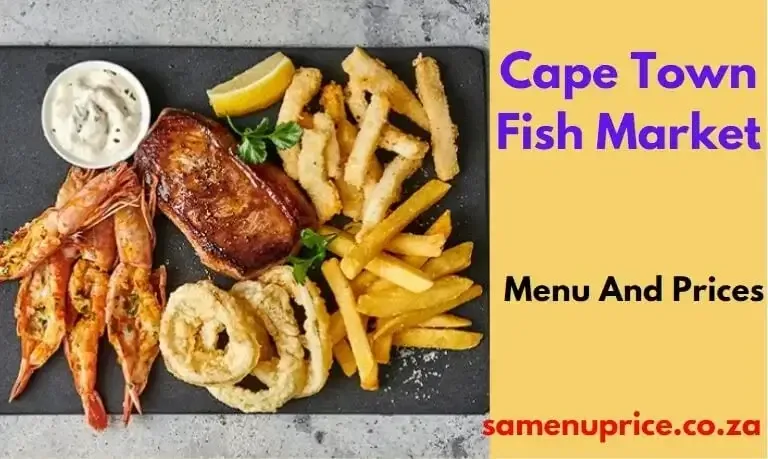
Cape Town Fish Market offers more than one kind of seafood meal. You can keep lunch simple with fish and chips, choose a grilled fish with a side, share a platter, or start with sushi. Meat and vegetarian choices also appear on the broader menu. That range is useful, but it can make the bill hard to predict if you compare dish names without looking at portion size, included sides and where you are ordering.
This guide gives a clear starting point. The prices below were checked against a publicly available Cape Town Fish Market food menu in September 2026. They are examples from that published menu. Branch menus, delivery platforms and limited promotions can carry different figures. Use the tables to compare items, then confirm the actual total with the restaurant before paying. The older price lists on this site have been removed from this article because they could not be treated as current.
Quick price guide
If you want the shortest answer, a 200g fish and chips is listed at R132 in the reviewed menu, while the 280g serving is R192. A calamari main is R170. Seafood Curry and Seafood Potjie are each R188. Grilled prawns start at R214 for eight, and a 200g Norwegian salmon is R338. Platters start at R230 for one in the examples below. These are menu examples, not a chain-wide guarantee. A delivery screen can show a higher amount for the same dish, even before fees.
| Dish | Published menu example | What to compare |
|---|---|---|
| Fish & Chips, 200g | R132 | 280g size and cooking style |
| Fish & Chips, 280g | R192 | Whether the extra portion suits you |
| Calamari, 250g | R170 | Grilled or fried preparation |
| Seafood Curry | R188 | Included rice and heat level |
| Seafood Potjie | R188 | Seafood mix and side |
| Grilled Prawns, eight | R214 | Number of prawns and sauce |
| Norwegian Salmon, 200g | R338 | 280g alternative at R396 |
The most useful comparison is not always the cheapest row. A larger serving can be good value if you genuinely want more fish, while a saucy curry may be the better full meal for somebody who wants rice and vegetables together. Ask what comes with the plate. A side that is included in one item can be an extra in another, and that changes the final cost.
What kind of menu is this?
The brand describes its food as a mix of South African and Japanese choices. Fish and chips sits beside sushi and sashimi, with grilled seafood, meat and vegetarian options available. That helps a mixed group: one person can order a familiar fried fish plate while another chooses a lighter grilled dish. It also means the menu is not organised around one single portion rule. A sushi order, a seafood curry and a platter serve different purposes.
Start by deciding whether you want an individual main, a small selection of sushi or a shared meal. If the group plans to share, agree on that before ordering. A platter for two may cover the seafood, but you may still want to add a salad or a side. If everyone orders a full main and then adds a platter “for the table,” the bill grows quickly and there may be too much food. Take a minute to look at the actual number of people and how hungry they are.
Menus may change with supply and location. Seafood prices in particular can move, and the exact fish or side can differ between a branch and a delivery listing. Read the current menu in front of you as the final source for your order. This article helps with the decision before you arrive; it cannot fix a price for every restaurant in the chain.
Fish and chips: choose the size first
Fish and chips is the clearest place to compare portions. The published menu example lists a 200g serving at R132 and a 280g serving at R192. That is a R60 difference for the larger portion. The larger dish is not automatically the better buy: it depends on whether the extra fish will be eaten and whether you are also having a starter or dessert. If lunch is light, the smaller serving may be plenty. If this is the main event and you are hungry, the larger one may make sense.
Ask whether the fish is grilled or fried in the version you are ordering and which sauce is included. The reviewed delivery listing describes grilled hake with lemon butter or deep-fried hake, with chips and tartar sauce. Delivery descriptions are useful for understanding how an item may be prepared, but the delivery price is separate from the restaurant menu price. Some branches may offer a side swap; check before assuming that rice, salad or vegetables cost the same as chips.
Fish and chips is also an easy meal for a group with different tastes because the choice can be made one plate at a time. Someone can have fried fish and another can ask for grilled. If a guest avoids wheat or has a seafood allergy, do not infer that a grilled plate is safe from its name. Ask staff about batter, sauces and shared equipment. The restaurant is best placed to explain its current kitchen handling.
Calamari and other lighter seafood mains
The published menu lists a 250g calamari main at R170. Calamari can be grilled or fried, and that decision changes the texture and the kind of plate you receive. Grilled pieces usually put more attention on the seafood and sauce; fried calamari gives you a crisp coating. Ask how the particular branch serves it, especially if the menu uses “calamari” without an explanation. A starter-sized calamari order is not the same as a main, so compare the portion before judging the price.
Zucchini Linguine is listed at R130 in the reviewed menu. It offers a non-fish direction for a guest who wants pasta, although the name alone does not establish whether the dish meets a strict vegetarian or allergy requirement. Sauce, cheese and kitchen preparation matter. A Prawn & Mussel Linguine is listed at R196 and is a richer seafood pasta choice. It is useful to compare these two as full meals rather than treating the lower pasta price as a direct alternative to grilled fish by weight.
A Sizzler is listed at R192. The delivery description presents it as a hot seafood mix with fish morsels, prawn meat, mussels, calamari and vegetables in a peri-peri style sauce, with savoury rice served separately. That is a different experience from a single fish fillet. If you prefer one identifiable fish and a quiet sauce, order a grilled main. If you want several seafood textures and a more seasoned plate, a mixed dish is likely to suit you better. Confirm heat and ingredients with the branch before ordering.
Curry and potjie: when you want a complete bowl
Seafood Curry and Seafood Potjie are each listed at R188 in the reviewed menu. Both are useful when a sauce and starch are part of the appeal. Curry typically brings a more pronounced spice profile, while potjie suggests a slower-cooked mixed seafood dish. The exact mix can change, so ask what is in the current version. If you avoid a particular shellfish, do not order a mixed seafood dish without checking. A menu heading does not tell you every ingredient.
Prawn Curry is listed at R210, a step above the general Seafood Curry example. It is a more focused choice if prawns are what you want and you do not need a mix of fish and shellfish. A curry may already come with savoury rice. Check the current menu before adding a separate side, or you may pay for more starch than you need. Ask about heat level too; “curry” covers a broad range of seasoning.
Saucy mains are practical for a cooler day or a long dinner. They can also be easier to share if you add an extra plate, although one main is still sized for one person unless the menu says otherwise. If the group wants a tasting meal, choose a platter designed for sharing instead of dividing one bowl into very small portions. The final bill is easier to understand when the number of full meals matches the number of people eating.
Prawns: compare pieces and sauces
The published menu examples list grilled prawns at R214 for eight, R280 for twelve and R362 for sixteen. The number of prawns makes the table clearer than a general “prawn main” label, but size and sides still matter. Ask what comes with the order and whether the sauce is lemon butter, peri-peri or another option. A strong sauce can define the dish as much as the grill does.
Eight prawns may suit one person who is also having a starter. Twelve or sixteen can work for somebody who specifically came for prawns, or for a group that plans to share several plates. Do not assume a larger count is proportionally cheaper without doing the arithmetic and checking what each order includes. Portion counts are easier to compare when you put them beside the actual price. Also allow for shells and the time it takes to eat them; a prawn plate can be a slower meal than fish and chips.
A Giant Prawn is listed at R256 in the reviewed menu. The price describes a different product from the eight, twelve and sixteen-piece options, so compare preparation and size rather than only the rand amount. The menu also lists Crayfish at R616, which is a premium choice. For expensive seafood, it is sensible to ask about availability, portion and current price before you commit. Supply can change what is on offer.
Kingklip, sole, tuna and salmon
Kingklip is listed at R246 for 200g and R306 for 280g in the reviewed menu. That mirrors the familiar small-versus-large decision with fish and chips, but the fish and cooking style are different. Choose the smaller serving if you want room for a starter or if you are sharing sushi first. Choose the larger one if the fish is the whole point of the meal. Confirm whether the quoted price includes your preferred side and sauce.
Grilled Sole is listed at R192 for a single 160g serving and R272 for a double. Sole offers a lighter plate for someone who does not want a heavy coating or a mixed seafood sauce. Seared Tuna, 200g, is listed at R296. Ask how the kitchen serves it if you have a preferred level of cooking; “seared” can surprise someone expecting fish cooked all the way through. The menu name is a starting point for that conversation, not an instruction that the restaurant can ignore.
Norwegian Salmon is listed at R338 for 200g and R396 for 280g. The larger piece costs R58 more in this menu example. Salmon is one of the higher-priced individual mains in the list, so compare it with a platter only if you actually want mixed seafood. If salmon is your favourite, a platter with a small amount of it may be less satisfying than a dedicated main. Ask about the sauce; one current delivery description mentions teriyaki and edamame, but branch presentation may differ.
Combos for people who want two favourites
A combo can be a sensible middle ground between one seafood main and a large platter. The reviewed menu lists Hake & Calamari at R204, Prawn & Hake at R238, Sole & Calamari at R246, Prawn & Calamari at R280, Surf & Turf at R272, and Executive Surf & Turf at R366. These pairings let you choose variety without paying for a shared platter that may be too large for one person.
| Combo | Published menu example |
|---|---|
| Hake & Calamari | R204 |
| Prawn & Hake | R238 |
| Sole & Calamari | R246 |
| Surf & Turf | R272 |
| Prawn & Calamari | R280 |
| Executive Surf & Turf | R366 |
The question is which half of the combination you care about most. Hake and calamari keeps the plate familiar. Prawn and hake adds shellfish. Surf and Turf is for someone who wants seafood and meat together, so it is a poor choice for a guest who avoids either. A combo may be cheaper than buying two separate mains, but it will also have smaller portions of each component. Check the exact composition and sides on the branch menu.
Platters: order for the right number of people
Platter names can be more memorable than their sizes. The reviewed menu lists Fish Hook for one at R230 and False Bay for one at R284. For two people, Kalk Bay is R562. Hout Bay is listed at R698, and the Executive Platter at R1,486. Ask how many the latter platters are intended to serve and what seafood is included. A large total price means little without that context.
| Platter | Published menu example | Planning note |
|---|---|---|
| Fish Hook | R230 | Listed for one |
| False Bay | R284 | Listed for one |
| Kalk Bay | R562 | Listed for two |
| Hout Bay | R698 | Check current serving guidance |
| Executive Platter | R1,486 | Check current serving guidance |
For two diners, compare the Kalk Bay platter with two individual mains. The platter may give you more variety, while separate mains let each person choose a favourite and a preferred sauce. If one diner dislikes mussels or calamari, a mixed platter can leave a lot of unwanted food. Ask what can be changed before ordering; substitutions may not be available or may cost extra.
Shared platters also change the pace of the meal. Everybody reaches for food from the same plate, which can be enjoyable for a group but less suitable when allergies or dietary rules differ. Request separate serving utensils if needed. Do not use a platter's name or photograph to estimate the final amount of seafood. Read the current description and ask staff when it is unclear.
Sushi is a separate ordering decision
The restaurant's broader menu includes sushi and sashimi, but the price examples here focus on the listed mains and platters. Sushi prices depend on the type of roll, fish, number of pieces and whether the order is a single serving or a platter. Check the sushi menu displayed by your branch when deciding how many pieces to order.
A small sushi order can be a starter before fish or calamari. A larger mixed platter may be a main for one or a starter for two. Count the pieces and look at what is inside them. A roll with cucumber and avocado is a different choice from one with salmon, prawns, cream cheese or a fried topping. Sauces and garnishes can change both taste and allergen exposure, so ask if any ingredient matters to you.
If the group wants sushi and hot seafood, agree whether you are ordering two courses or sharing everything. Ordering a full sushi platter plus full mains for everybody can be costly. Begin with one course and add only if needed. This keeps the meal enjoyable and makes the bill easier to control.
Meat, vegetarian meals and children
Not everybody at a seafood restaurant wants fish. The brand's current description says it offers meat and vegetarian choices alongside seafood. The published menu material reviewed for this article also shows steaks, but availability and pricing can differ across locations. If a guest plans to order meat, let them choose from the branch's current menu rather than relying on a seafood price table. A mixed group should look at the entire menu before settling on a venue.
For vegetarian diners, ask what is in the sauce and whether a dish uses fish stock or seafood garnish. A pasta name or vegetable photograph is not enough to establish the ingredients. For guests with allergies, a seafood kitchen may use shared equipment. Staff can explain current preparation and help you decide whether a dish is suitable. This is especially important for a child or an adult with a serious allergy.
Children's choices and promotions can change by branch and day. A smaller main from the adult menu is another possibility if a child prefers a simple fish dish. Compare the size and price with the current kids menu rather than assuming the kids option is always the best value. Ask what is included in any advertised promotion; drinks and dessert may be separate.
Sides and add-ons can change the bill
The reviewed menu lists add-ons including two prawns at R56, calamari at R60, mussels at R76 and baby squid at R96. An add-on can be a useful way to try a second seafood item without moving to a platter. It can also turn a reasonably priced main into a more expensive plate if several extras are added. Keep a running total when ordering, especially if each person adds a sauce, side or extra protein.
| Add-on | Published menu example |
|---|---|
| Two prawns | R56 |
| Calamari | R60 |
| Mussels | R76 |
| Baby squid | R96 |
Ask whether chips, rice, salad or vegetables are included with your chosen main. The answer may differ across dishes. A side swap can be available, but check for an extra charge. Sauces may also be included with some seafood plates and charged separately with others. These details matter more to the final bill than a small difference between two headline prices.
For a lighter meal, consider a grilled fish with vegetables if that side is offered. For a filling meal, fish and chips or a curry with rice may be simpler. There is no single “best value” item for everyone. Value depends on how much food you want, whether you enjoy the included side and whether you would otherwise order extras.
Why delivery prices look different
A current Canal Walk delivery listing shows the 200g Fish and Chips at R138.60 and the 280g at R201.60. The reviewed published menu lists those sizes at R132 and R192. The delivery listing also shows 200g Norwegian Salmon at R354.90 while the reviewed menu lists R338. These examples show why it is important to name the channel. The delivery amount is the price displayed for that branch on that service and may be followed by delivery and service charges.
Do not use a delivery screenshot to tell somebody the dine-in price. The reverse is also true: a menu PDF price is not a promise that the delivery checkout will match it. Open the actual basket to see the food subtotal and any fees before confirming. If you can collect the order yourself, compare the collection price as well. Sometimes convenience is worth the difference; the key is knowing what you are paying for.
Delivery menus can also omit dishes that are available in the restaurant or show an item as temporarily unavailable. A platter that travels poorly may be handled differently from fish and chips. If you are planning a meal for several people, check availability and portion descriptions in the ordering channel you intend to use, not just in a general guide.
Specials need a second check
Cape Town Fish Market advertises weekly offers, but promotions are more likely to have conditions than ordinary menu items. They can depend on the day, participating branch, loyalty membership, dine-in status or a set menu. The promotional terms reviewed during research describe restrictions and warn that items and prices can change. For that reason, this article does not fold a limited special into the regular menu tables.
If you are going for a particular deal, ask the branch three things: Is the offer running on your chosen day? Is it available to you without another requirement? What exactly comes with it? A fish and chips promotion may specify a portion size and side. A set menu may limit the starters and mains you can choose. A discount on one sushi category may not apply to a signature roll or platter. Those details matter more than the headline percentage.
When comparing a special with the normal menu, calculate the actual order you want. A discounted item you would not otherwise choose is not automatically good value. If the offer is unavailable, you should still be able to order something you enjoy within your budget.
How to plan a meal for two
For two people who want familiar seafood, compare two 200g fish and chips plates with a Kalk Bay platter. At the published menu examples, two fish and chips plates would total R264 before drinks or extras, while the platter is R562. These are different meals, so the comparison is about budget and variety rather than a claim that one replaces the other. The platter may offer more seafood types and a shared experience; the fish plates are a lower-cost, predictable choice.
If one person wants prawns and the other wants fish, separate mains are clearer. An eight-prawn serving is listed at R214 and 200g fish and chips at R132, giving a R346 food subtotal before drinks or additions in that example. If you choose a starter, add it to the calculation before deciding the meal is inexpensive. A shared starter can be pleasant, but it is easy to forget it when thinking only about main prices.
For a more leisurely dinner, one person may choose salmon and the other a combo. The 200g salmon at R338 plus Hake & Calamari at R204 gives a R542 example subtotal before other charges. Branch and delivery amounts may differ. The purpose of doing this arithmetic is to put the menu in context: a small number on one row rarely tells you what the whole evening will cost.
How to plan a group order
A group can begin with one or two shared starters and then let each person choose a main. This works when tastes differ, because it avoids paying for a large platter that only some guests enjoy. Alternatively, a group that likes the same seafood can build the meal around a platter and add a few individual choices. Decide who is sharing what before ordering. That sounds obvious, but a platter placed in the middle often creates confusion if several people thought it was an extra rather than their main.
Ask whether a platter comes with enough sides for the group. If it does not, add sides deliberately. A salad can balance a rich seafood selection; extra chips may be welcome for hungry diners. Ordering both without counting portions can create waste. When a guest has an allergy or avoids shellfish, give them a separate meal and utensils. Do not expect them to pick around an ingredient on a shared plate.
For a celebration, call the branch about availability of premium seafood and the size of the group. A menu listing does not guarantee that every item is available every day. This is especially useful if you have chosen the restaurant for crayfish, a large platter or a particular sushi selection.
Questions to ask before you order
First, confirm the current branch price and the portion. Ask whether the fish weight is the smaller or larger option, and what the plate includes. Second, choose the cooking style and sauce. Third, check any substitutions or extras. Those three questions prevent most surprises on the bill. If you are ordering for a dietary need, ask about ingredients and preparation as a separate question rather than assuming a menu label tells the whole story.
For a platter, ask how many people it is intended to feed and what seafood makes up the selection. For prawns, ask about count and size. For tuna, ask how it is served. For curry or potjie, ask what is in the seafood mix and how spicy it is. For a promotion, check the conditions before deciding that the headline price applies. A waiter or current ordering screen can answer these better than an article written in advance.
Check the final order back once before it goes to the kitchen. It is easier to correct an extra side or the wrong portion then than after the bill arrives. This small pause is especially useful in a large group where several people have ordered similar fish dishes.
Frequently asked questions
How much is fish and chips at Cape Town Fish Market?
In the published food menu reviewed in September 2026, Fish and Chips is R132 for 200g and R192 for 280g. A current Canal Walk delivery listing shows higher prices for those same sizes. Confirm the price for your branch and ordering channel before paying.
Which menu item is good for one person?
Fish and chips, calamari, a grilled fish main or a one-person platter are all straightforward choices. Pick by appetite and preferred seafood. A platter for one gives variety, while a single fish main gives a larger focus on one item. Compare included sides and sauce, not just the name.
Can two people share a platter?
The Kalk Bay platter is listed for two in the reviewed menu, with a price example of R562. Other platters have different serving guidance. Confirm the current description, ingredients and side portions before treating any platter as a full meal for two.
Are delivery and restaurant prices the same?
They may differ. The Canal Walk delivery examples checked for this guide are higher than several prices in the published menu reviewed. Delivery fees can add more. Use the checkout total for a delivery order and the branch menu for a dine-in or collection order.
Does every branch offer the same specials?
Do not assume that. Weekly offers have conditions and can change by date and branch. Ask the restaurant about the specific offer, eligibility and included items before you travel for it.
The useful way to read this menu
Begin with the meal you actually want: a simple fish plate, a mixed seafood bowl, a premium grilled fish or a platter. Then compare the size, side and sauce. The published menu examples give you a budget range, but your branch's current menu decides the price. This is especially important for premium seafood and specials.
If you are unsure, a 200g fish and chips gives a clear starting point. If you want variety, a combo or one-person platter is easier to understand than adding several separate extras. For a group, agree on sharing before ordering. Keep the bill in mind as you add drinks, sides and delivery fees. A good choice is the one that fits both your appetite and your budget when the full order is counted.
More menu images